leveling the room with possibilities of sound

written by Lou Touyarou
editing by Monse Alvarado Alvarez
photography by Monse Alvarado Alvarez, Tom Venrooy, Brandino Verhaak & Alex Roux
how does sound translate into shared, embodied experiences in the places we come together? in the search of answering these questions, the community of possibilities open studio (pos) found a new dream of crafting communal experiences. this led the project deeper into sound system culture, open source knowledge sharing, accessible speaker design and innovation. and so, possibilities of sound was born.
in this first long-form publication, we introduce possibilities of sound, a project very close to our hearts. at the core of this exploration of more than a year and a half is the search for ways to bring good sound in an accessible, creative way for all listeners, dancers and sound system builders alike.
the aim is to bring unified experiences to physical spaces by finding the most ideal conditions for constant directivity of sound. when levelling a room and bringing an equal sonic experience, a collective feeling through music is created. this is where the project is particularly innovative. in pursuit of constant directivity, the project develops a simulation software that calculates the ideal speaker shape for any given space, soon to be available open-source. alongside this, a new manufacturing process is being explored, combining large-scale 3d printing with a newly developed wood-fibre based material. yet this goes way beyond technical or physical elements, but it is about creating a space for feeling together, connection and for this indescribable, yet familiar, feeling that emerges from special dancefloors.
the first gathering around the custom-built sound system, crafted by the minds, hearts and hands of the people orbiting pos, took place at the studio on may 3rd 2026, with pos on highfrolics. the system came to life in a beautiful way, the sound guiding us through listening and moving together. this article traces the full story that led pos here, through diy soundsystem culture, dancefloors and a philosophy sparked by the democratisation of knowledge through open-source technology.
guided by the love of music
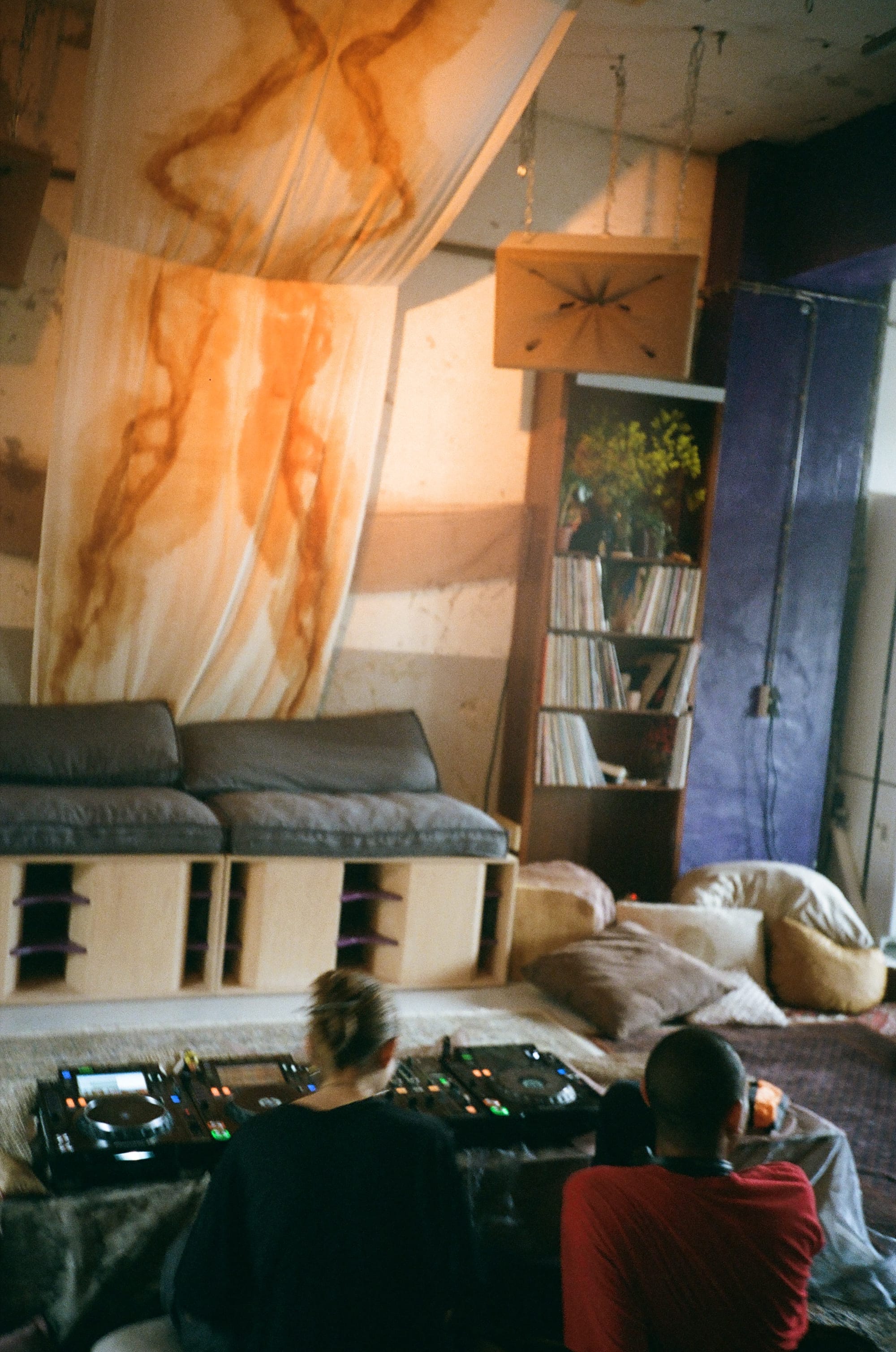
although possibilities of sound has a strong focus on technology, there is an equally important emphasis on bringing people along and demystifying the process of DIY sound system making. this project has grown to involve experienced engineers and pioneering designers, but it did not start that way. at its root, there is something much simpler. a pure love for music and the curiosity to follow it wherever it led, within the space created at pos.
the story behind pos begins in 2023 like many young people in Amsterdam, two friends connected through their interest in electronic music and the curiosity of mixing. Tom and Jip receive the keys to a studio which will soon become pos. at the time, an empty space within the Centrale Markthal, a huge historical building, meant to be renovated, eventually. pos slowly and consistently transformed into a collective hub tucked away in a nook of one of many studios in the building. not easy to find if you don’t know where to look.
along the way, pos’ friend Boaz, now Offbeat Records co-founder, brought these friends along into record digging. in parallel, Jip and Tom’s technical understanding surrounding sound grew step by step. by organising parties with bigger speakers. amplifiers, new kinds of cables and with every setup slightly different. without knowing it, every small moment was laying a foundation. in 2023, pos had a change of gears when they got their first sound system, which they got from Boaz. now, 3 years later, Offbeat Records gives possibilities of sound the trust to build their first commissioned sound system for their record shop, making this a beautiful full-circle moment.
it all began through friends, then friends of friends, then strangers who became friends. with a love for DIY culture, a strong focus on care, pos grew into a community-run space in which co-creation is the central way of operating. everyone involved regularly comes back to the question: what is it that people need? and how do we deeply listen in the presence of others?
cultural understanding of soundsystem philosophy
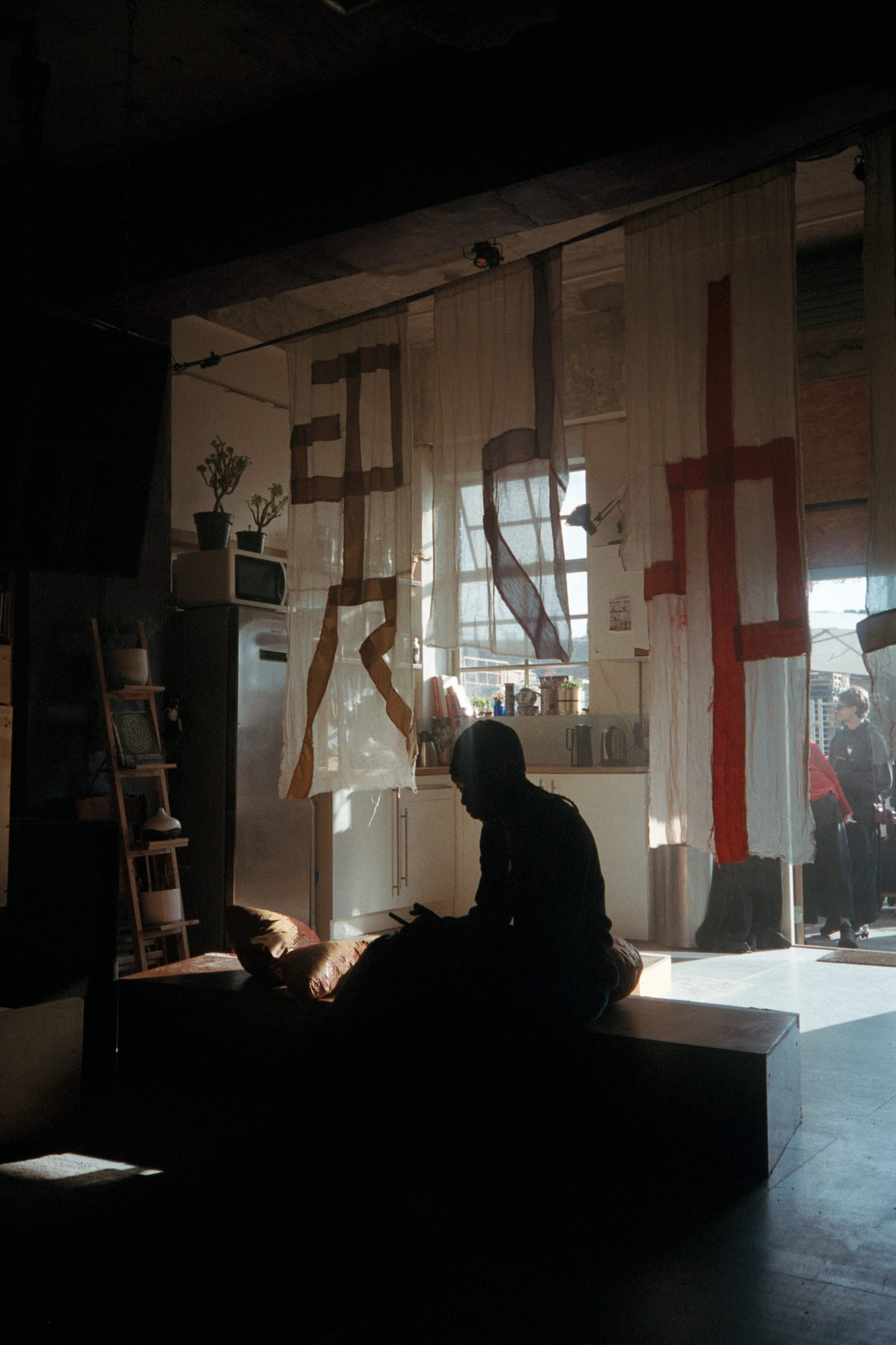
during those three years of running continuous events and experiencing other spaces in and around Amsterdam, certain questions started to arise. what defines good sound? which voices do we want to amplify with this project? how can sound turn into a bodily experience?
these questions led pos deeper into soundsystem culture, and its influence served as a standpoint that helped direct and evolve pos’ vision. systems like King Shiloh played an inspiring role in how to create unity and cohesion on a dance floor. a certain feeling that perhaps was hard to find elsewhere. the sound shakes you from the inside, allowing you to dive deeper into the sound and reach a deeper layer of experiencing music.
beyond the sonic layer, there is also a historical and cultural foundation. sound systems emerged in Jamaica and other parts of the Caribbean as a direct response to economic and social exclusion, an alternative to inaccessible, expensive concerts, speaking directly to the working class by playing folk music. unlike national radio, there were no rules about what could be played or who could be heard. the name of one early system provides the crucial context: "Voice of the People."
with the Windrush movement bringing Caribbean communities to the UK in the postwar years, sound system culture travelled with them. in a social context of widespread racism, these communities were routinely turned away from venues and found their own spaces instead, homes, dancehalls, streets. sound systems became more than a way to share music. Soul II Soul's Jazzie B mentioned in an interview, "the most important thing about sound systems is they empowered us in our community."
through this cultural and historical understanding, came the realisation that sound isn’t just sound, but it is the choice to amplify certain voices, and an important tool to create empowerment, connection and unity. these beliefs didn’t stay in the past; they transformed into today’s challenges. in an environment where knowledge and technology are gatekept, and celebration is only allowed when it serves the (economic) interests of a specific group of people, music can still unify us. understanding this history means that running a sound system becomes more than an act of pleasure, it becomes an act of care and a commitment to what this culture was built on.
by collaborating with younger local sound systems, Kantarion Sound, Krackfree, Addit Audio, Many Voices, El Gran Fugaris & Mighty Dread Warrior Machine, this understanding kept deepening. each system brought its own sonic preferences, its own energy and way of operating. experiencing sound built and run differently, every occasion makes you realize that the perfect soundsystem does not exist, it's always a reflection of the builder's intentions. the possibility to shape an entire experience around a specific sound, to make people feel something particular in a room, is what makes each session unique.
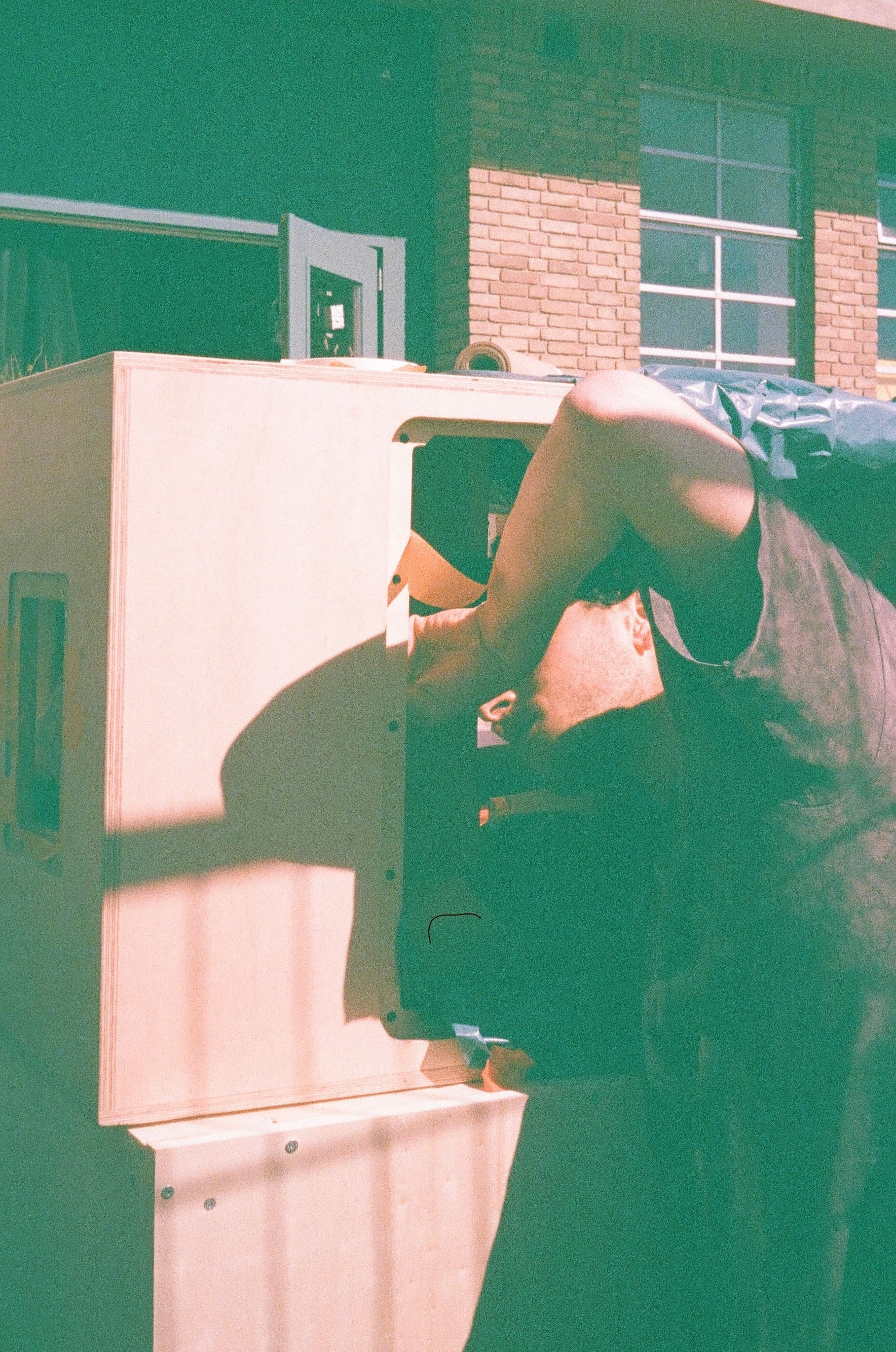
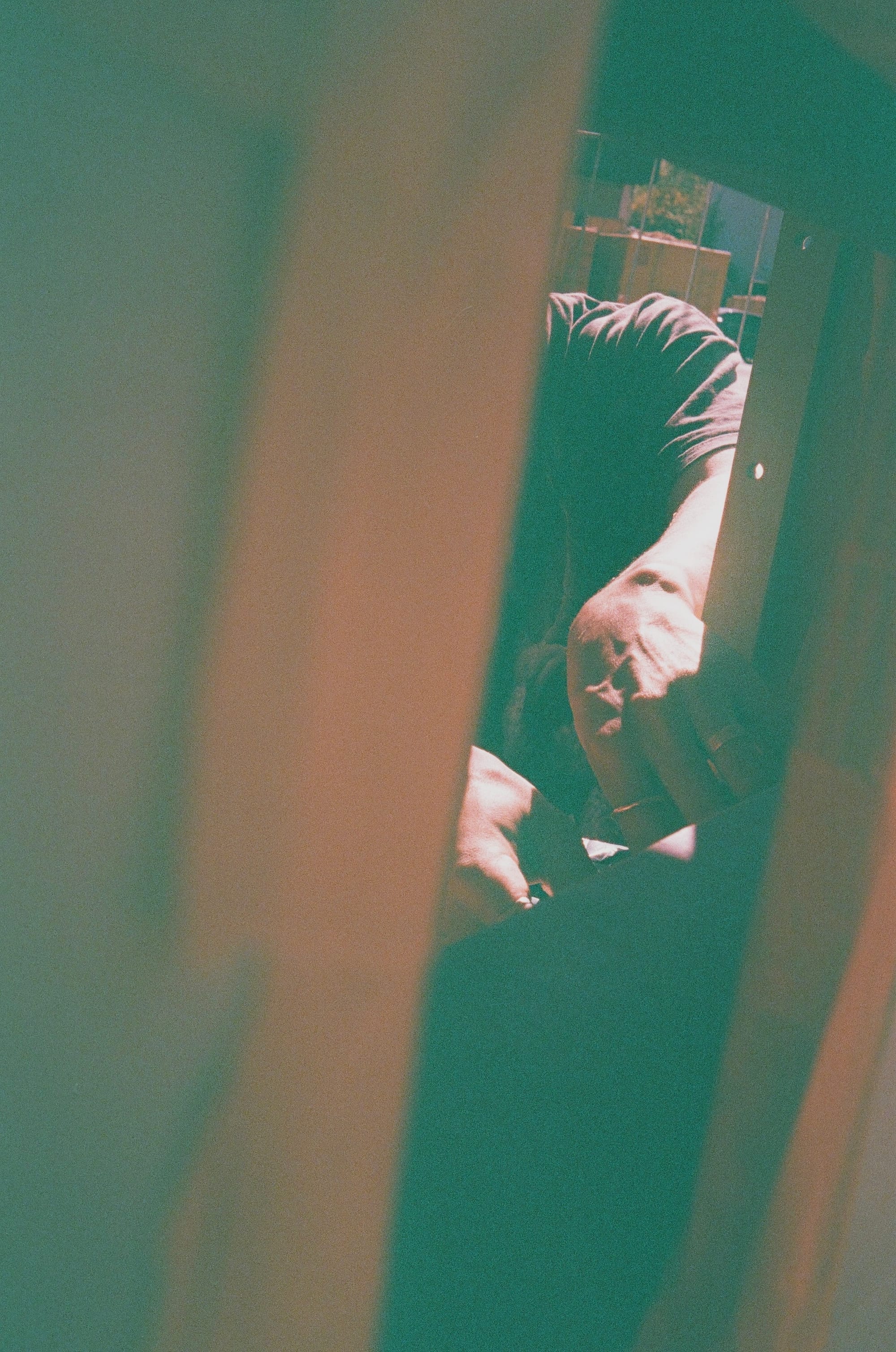
pictures by Monse Alvarado Alvarez
constant directivity & unified experiences
from early on, possibilities of sound had the objective of providing an equal experience for everyone on the dancefloor, laying the concept of constant directivity. at its most basic level, it refers to the even distribution of sound across a space. a solid foundation to create unified experiences, these moments of true connection and creation on the dance floor.
constant directivity operates on two levels at once. beyond the spatial dimension, there is the need for balance across frequency spectrums of bass, midrange and higher frequencies. our ears are particularly sensitive to the latter two, and when there's too much energy in those ranges in relation to the rest, the brain starts to compensate in an attempt to balance the input of sound. this internal protective mechanism explains why some systems feel tiring even at moderate volume, while others feel effortless when loud. by getting the right balance we are able to feel the music in the way it is intended to be felt by the producer. like the bodily sensation of the kick drum on your chest and the bass in your belly.
this is where room acoustics start to play an important role too. a space which isn’t treated acoustically will create a lot of reflections. naturally, every room, based on its dimensions, will enhance certain parts of the frequency spectrum more than others.
for example, in small rooms the kick is often very boomy, especially in the corners. the sound, coming from the speaker, will directly hit the wall facing and travel back, like a bouncing ball. imagine a thousands of bouncing balls jumping in a space around you and through you. not only can this phenomenon alter your perception of the original sound, but it also creates a lot more information. the mind functions as a pattern recognition device, and as sound patterns distort, the mind has to work harder, leading to fatigue.
well-placed panels and absorbers limit this effect by absorbing them into their mass and containing misleading sound reflections. because they contain the sound and contribute to a clearer sound, it regulates the amount of information your brain has to process, therefore leading to a way more comfortable, and potentially deeper experience. a well-balanced energy distribution allows our brain to authorise higher volumes without triggering the pain or fatigue response. then, something shifts; you can start feeling that the sound is physical rather than just audible.
when all variables are right and constant directivity is taken into consideration, unified experiences begin to unfold. everyone receives a more equal sonic experience, and the body is more present and at ease. even when we don’t notice, our bodies do. this goes way beyond the technical or physical elements of it, and it can go very deeply into imagination, introspection, connection and even a clear feeling of love.
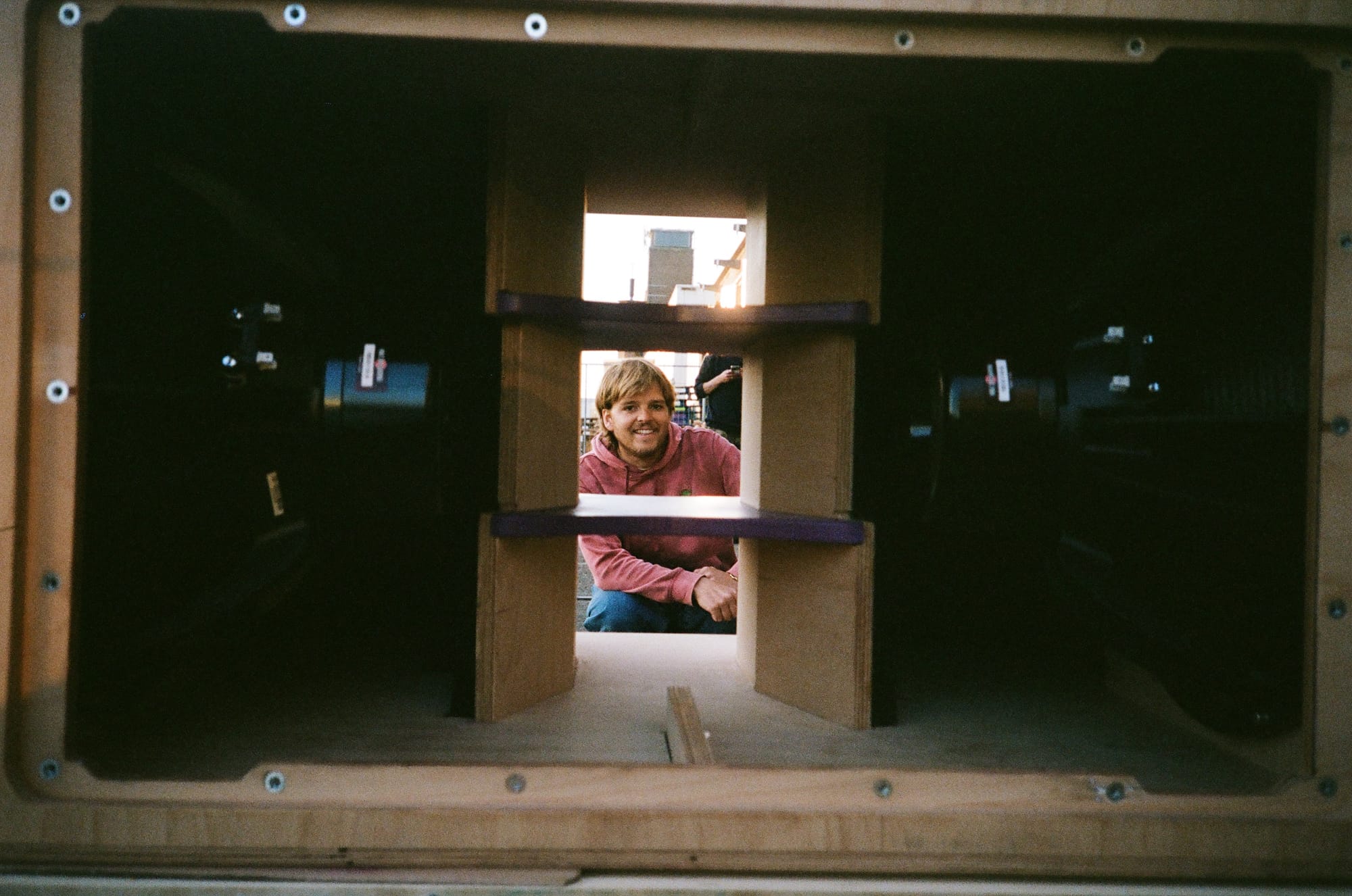
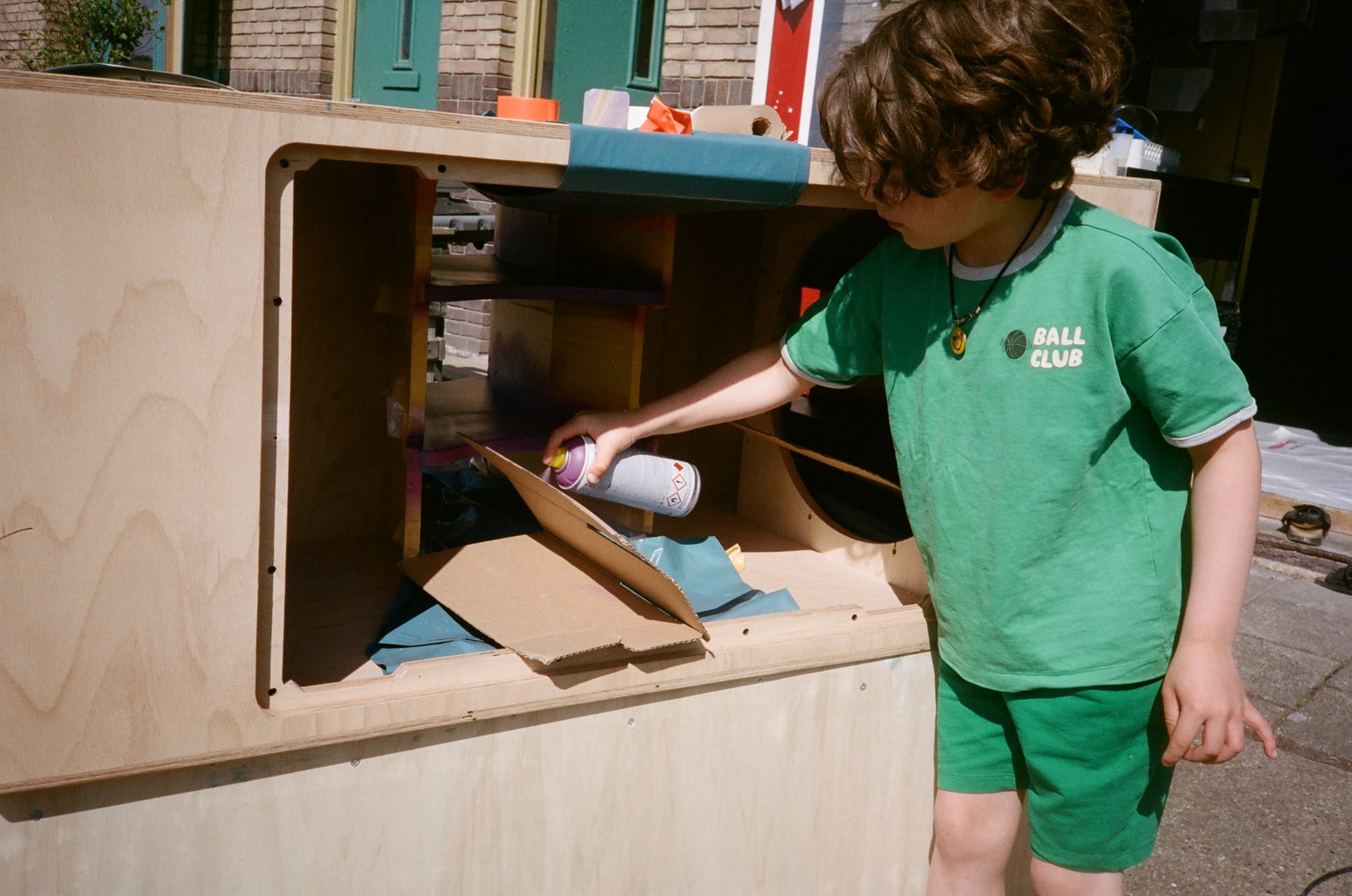
pictures by Tom Venrooy
accessible technologies & material innovation
in 2024, during a trip to Berlin, a spontaneous encounter with David set things in motion. he recently started a job as a design engineer at 3DMZ, a leading innovation hub specialising in technologies like 3D printing and robotics. the conversation sparked something, and for the first time the idea of building a custom sound system felt within reach. the timing was right, as 3DMZ had the space and equipment to print speakers, a quite unique opportunity.
in usual pos style, things went very quick. the love of sound and music, coupled with the engineering background of some of pos’ members, laid a solid foundation. within a week, a plan was presented, which turned out to be an exciting challenge for their team.
at 3DMZ, we are big fans of innovation in collaboration with the creative industry. it opens up new thinking paradigms and raises different types of questions than the ones we usually get from industry partners during the creative process.
David explains that when they adopt an alternative perspective, the innovative solutions that emerge from this way of thinking are not just theoretical, they're actually useful for solving practical engineering problems that exist in other industrial settings.
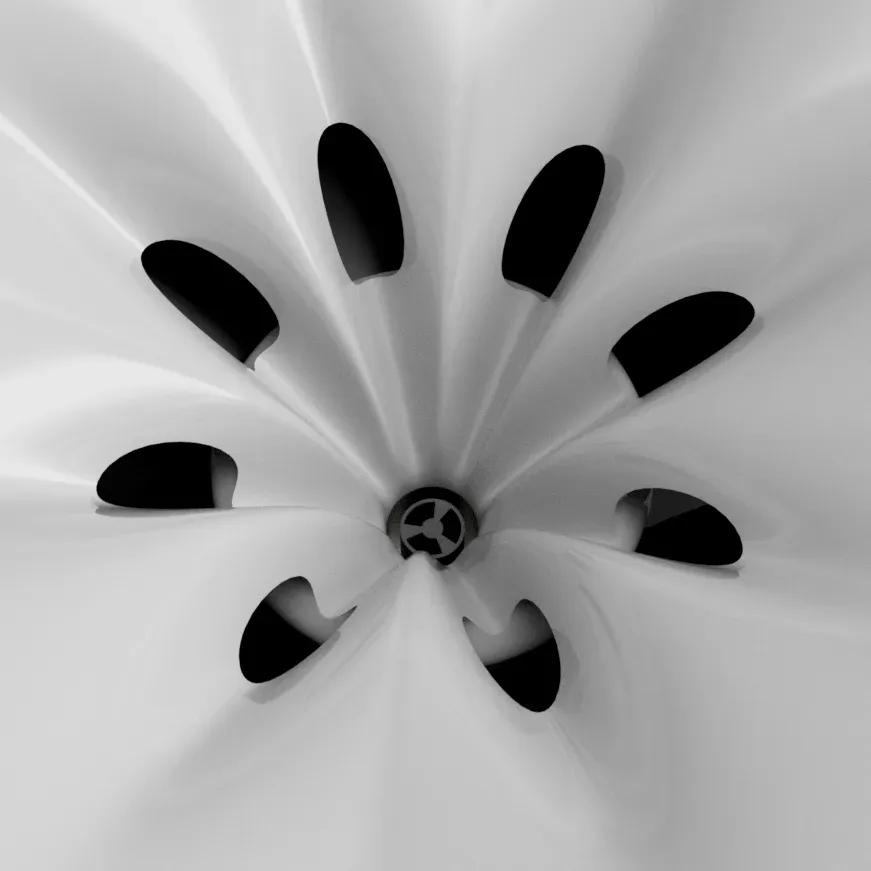
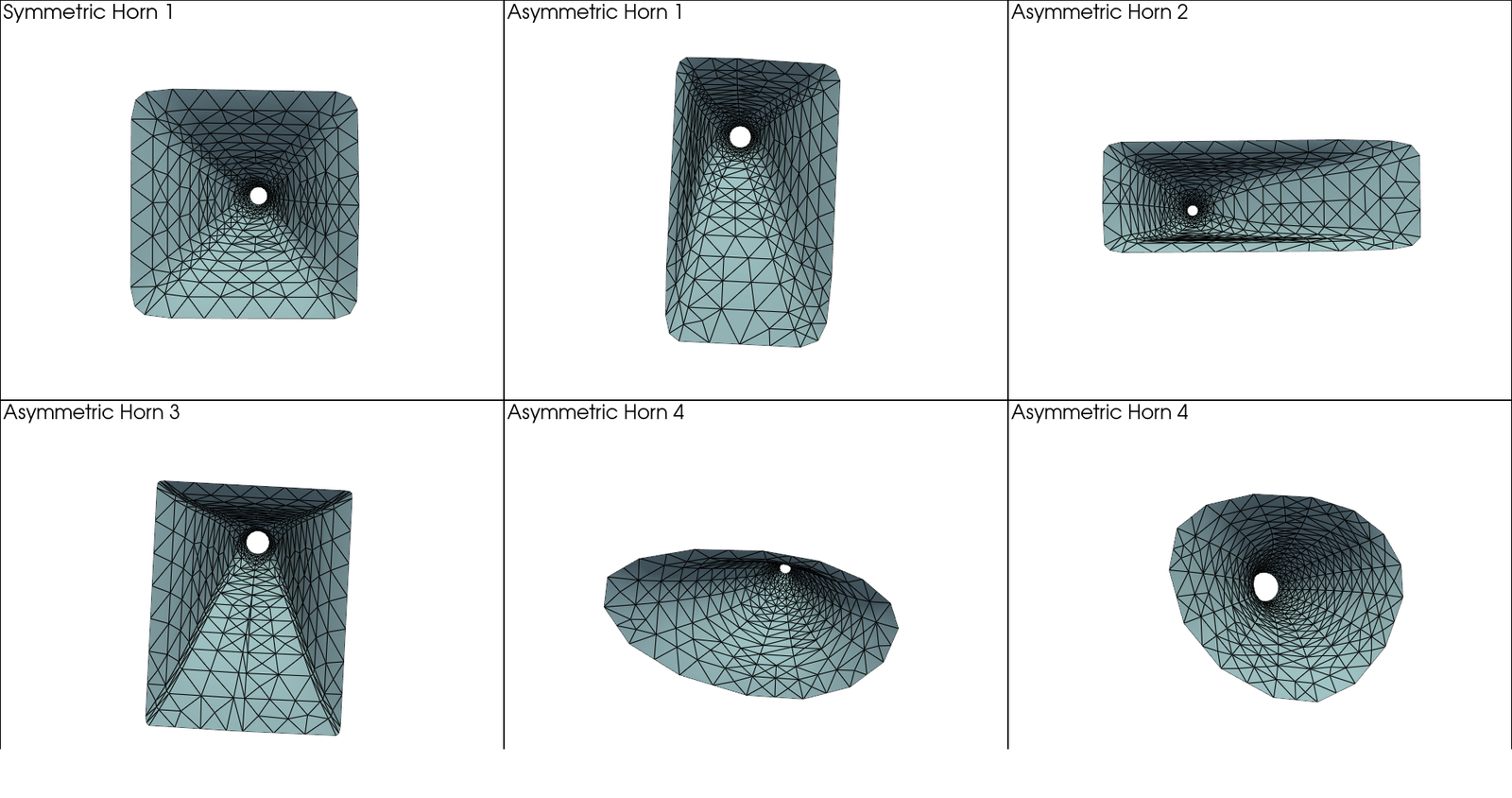
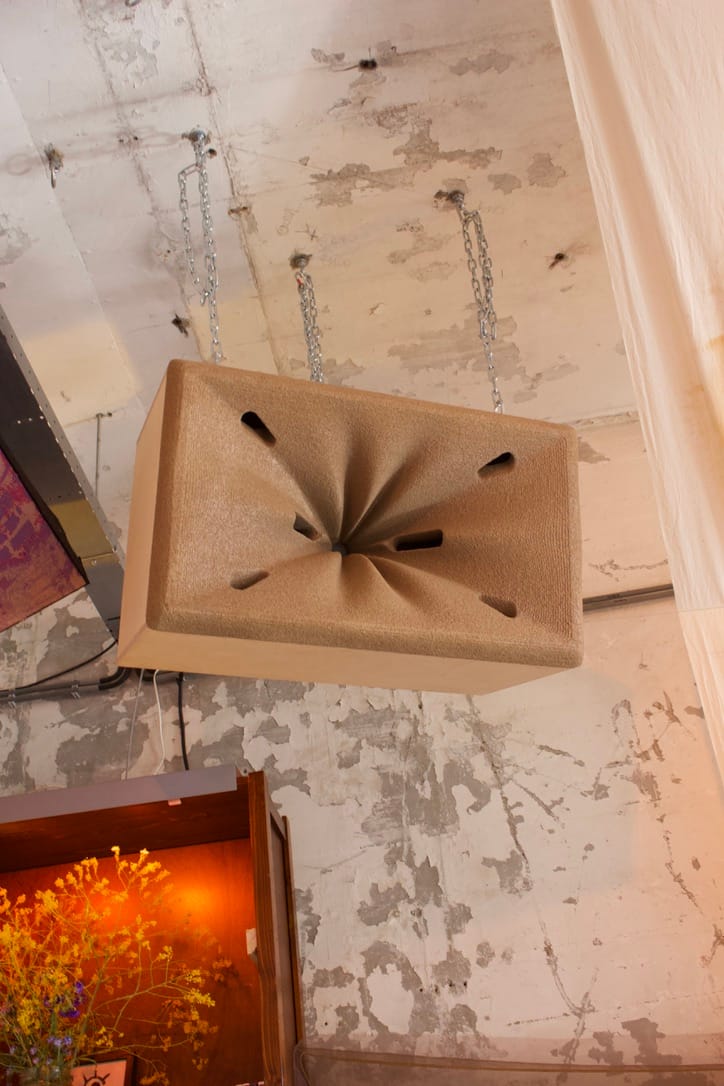
this project is innovative in two ways. the first is how we design the actual shape of the speaker, using an algorithm that digitally simulates and optimises the shape to achieve the best result. this process produces complex curved geometries which can only be produced using additive manufacturing (a.k.a. 3D printing).
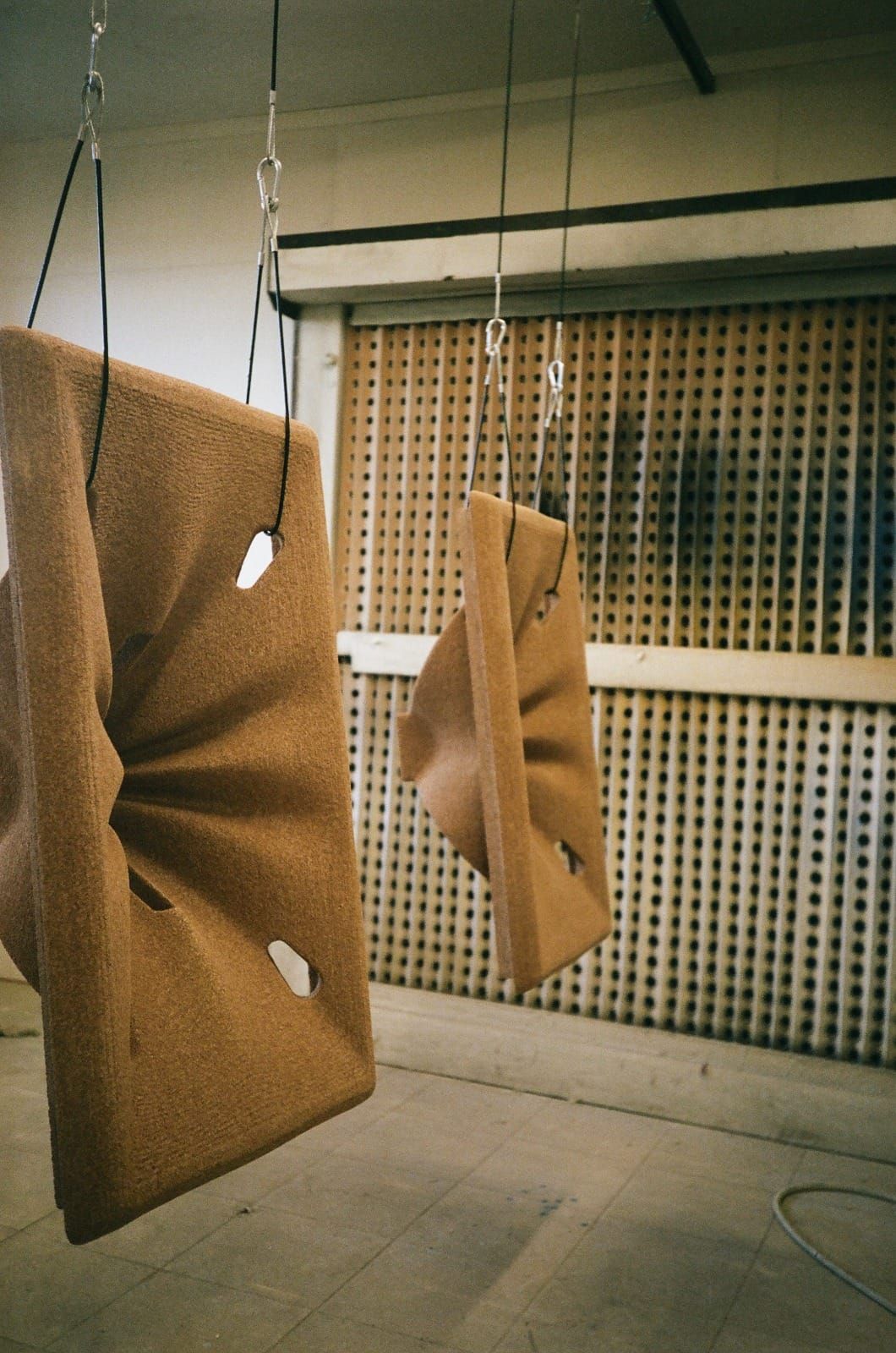
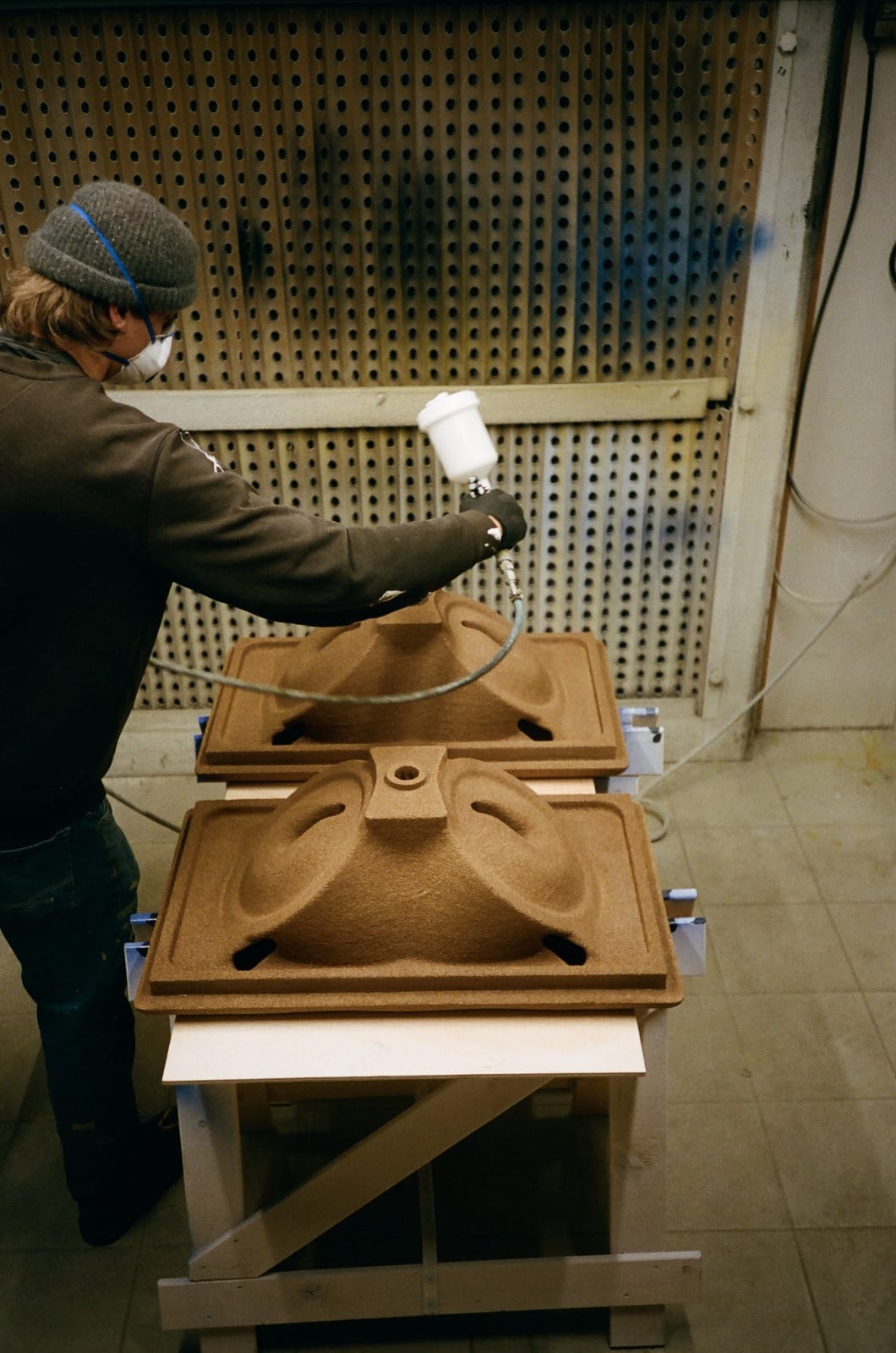
the second is how we manufacture it: combining large-format 3D printing and CNC milling (a computational milling machine that understands where to make cuts) in a single production set-up with two robotic arms. we managed to produce two functional prototypes using large-scale binder jetting technology with wood fibres.
in simpler terms, the shape of these speakers could not exist without this 3D printing technology, experimenting with a new material made out of wood fibres and natural binder elements. the speakers now hanging in the pos studio were the first objects collaboratively made with 3DMZ in this way.
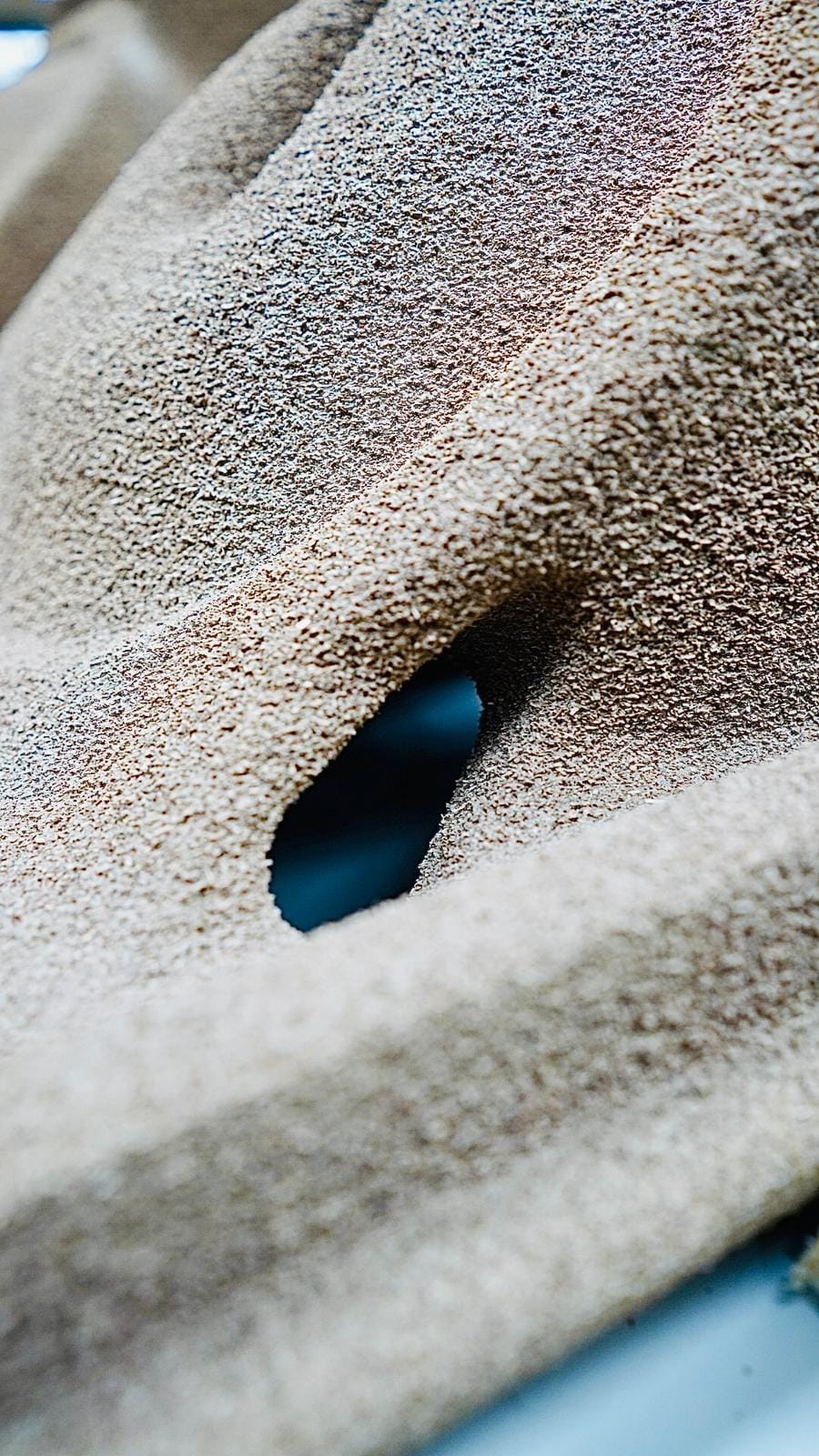
picture by Brandino Verhaak
soon after that, the team expanded to include John White from JW Sound. recognised as a pioneer in the DIY speaker building scene, John's work centres on pushing the boundaries of horn design, exploring how multiple speaker drivers can be combined into a single one, a design known as a multiple entry horn, for a more precise and cohesive sound. when Tom reached out, John was already experimenting with 3D printing at a smaller scale, so the possibility of working with large-format machines opened up something new for him.
while I have a few designs that incorporate additive manufacturing using readily available 3D printers, this project represented the first time I was able to work on a project using much bigger, large-format additive manufacturing (LFAM) methods. with readily available consumer 3D printers, you’re somewhat limited as a designer to work within the constraints of small print volumes and limited materials. this means that in terms of scale, it's difficult to make larger speakers since structural rigidity and weight limits become a concern. for me, they’ve opened up the potential for novel design.
it’s a very exciting time in the industry where rapid advancements in both manufacturing and software are enabling existing status quos to be disrupted and new ideas to enter the market.
what made John a particularly natural fit for this project goes beyond the technical. like possibilities of sound, he believes that knowledge should be shared openly, publishing all his designs with in-depth explanations on his website.
music has always been an integral part of my life. when i first ventured into the soundsystem world, I found a community that was united around collaboration and the love of music.
Simon-Luc Laporte coined the idea that a sound system integrates social, creative, and scientific realms into a unified boundary object. this idea has really resonated with me, and while i’d say that my work definitely leans more towards the scientific, I am deeply motivated by how these three dimensions intersect to shape collective experiences.
i’m an avid supporter of open source. i believe that collaboration and the open exchange of information are essential for the state of the art to advance. so my hope is that my work can spark future innovations and inspire others to experiment and challenge established boundaries in the field.
speaker building exists on a kind of spectrum. at one end, conventional construction using materials like plywood, accessible to anyone, but limited to flat surfaces and straight angles. complex organic shapes simply aren't possible. a step further, FDM 3D printing has made its way into the DIY community, affordable and accessible, but limited in size and material strength for professional use.
what is done differently through this project is the connection between large-format 3D printing and horn design simulation software in a single integrated workflow. from design file to finished object, without manual steps in between. the shape isn't designed first and then tested. the software starts from the desired result and works backwards, calculating the optimal horn shape for an evenly distributed sound within a certain space. the form follows the goal, not the other way around.
but the ambition doesn't stop at large-scale production. the next step is making that same logic available to anyone with a home printer by making this software available open-source.
the open-source software development aims to democratise speaker building globally, allowing DIY builders to generate horn shapes for various settings. until recently, this level of customisation was only accessible to large companies with significant research and development budgets. the tool changes that. anyone, from individuals to small venues, can use it on a home computer.
beyond the software itself, the project has a clear democratisation mission: injecting knowledge and resources directly into the diy soundsystem community. the goal isn't to keep this innovation within a closed circuit of well-funded producers, but to make it available to the builders who are already doing this work with limited means.
woodworking and craftspeopleship
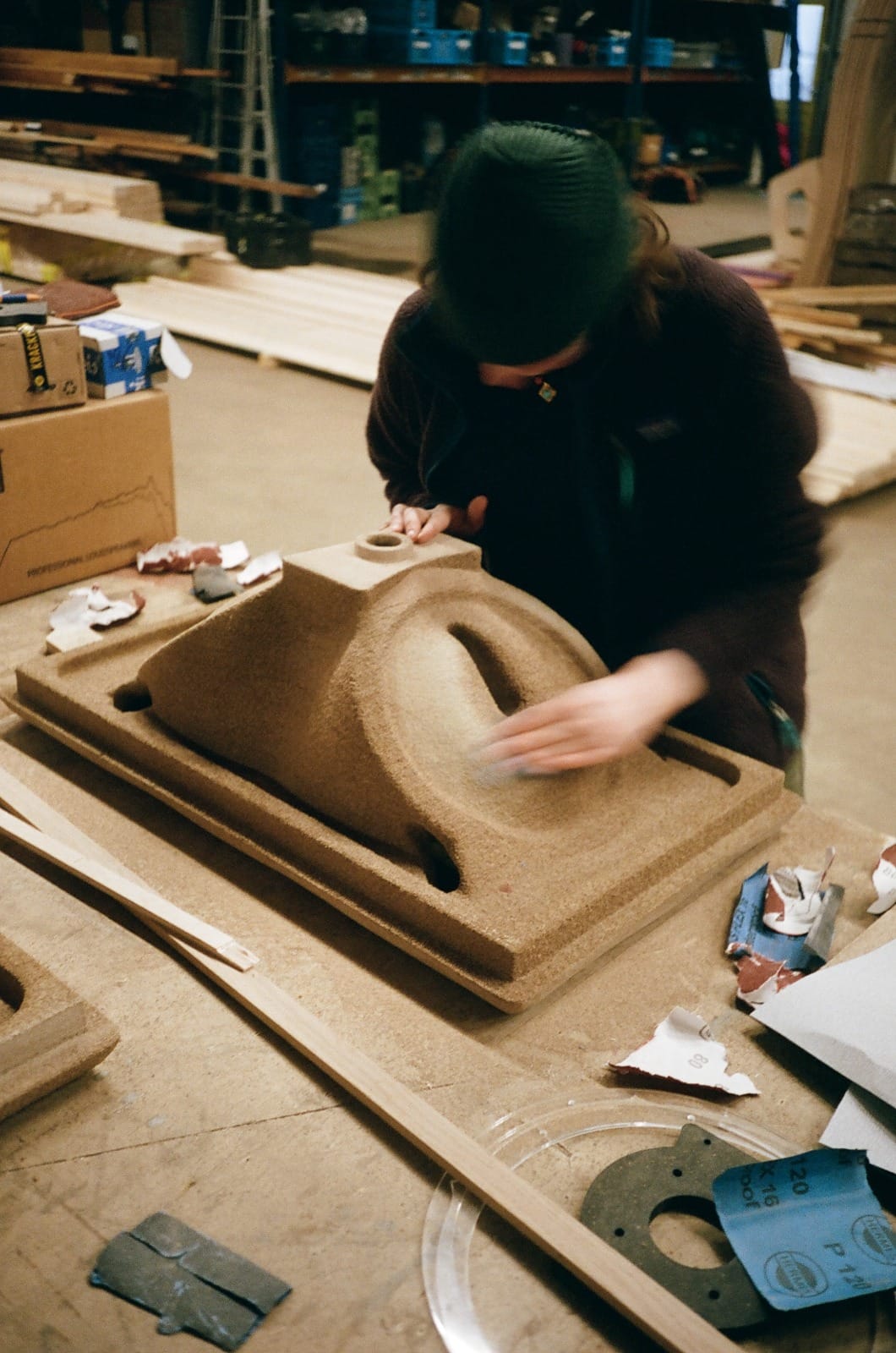
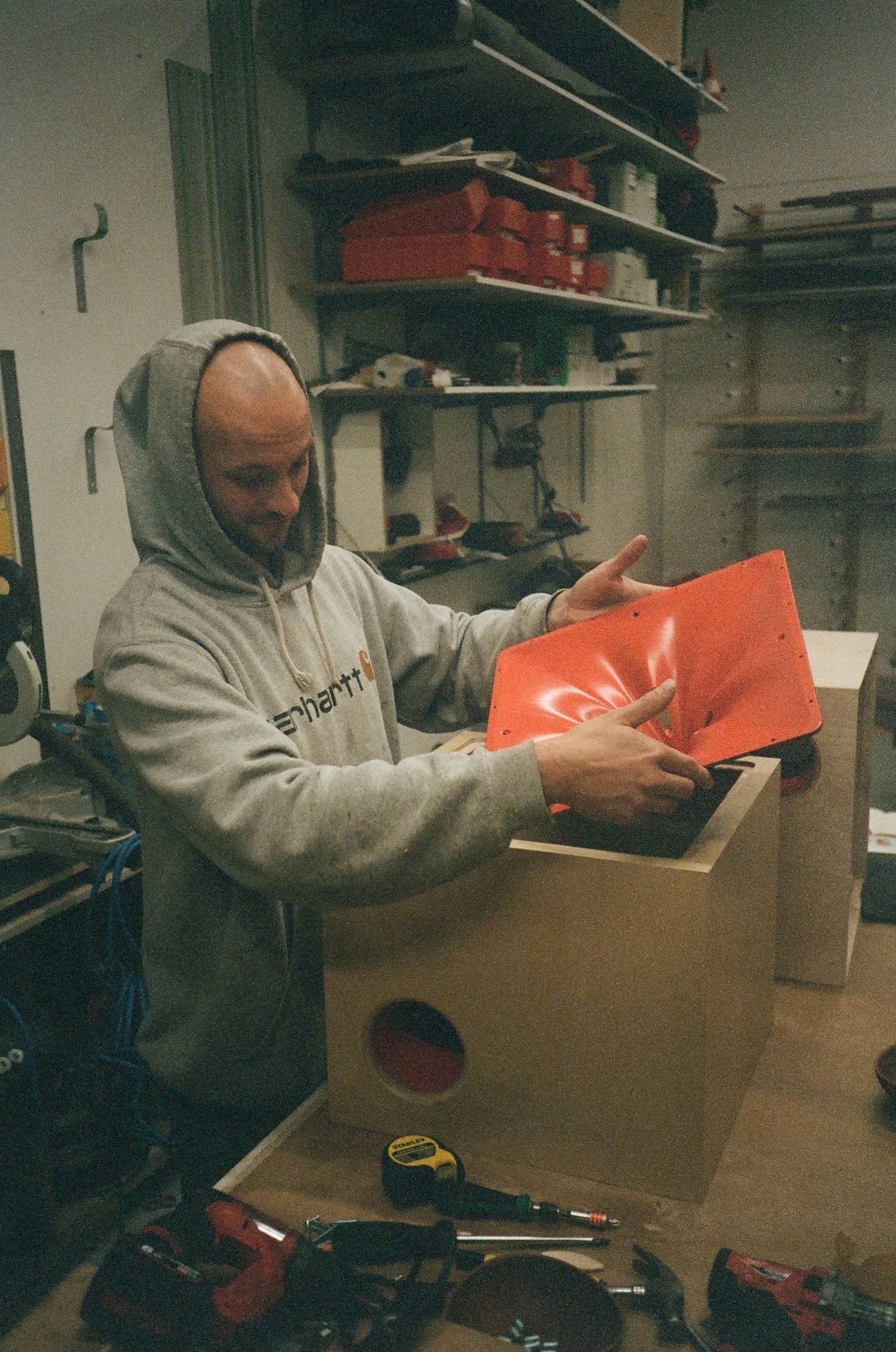
the horns may be digitally designed and 3D printed, but the cabinets housing them are built by hand. this is where the craftsmanship of Nemo Mulder, also part of Pattern Soundsystems, came into play in carrying out the cabinetry for the systems at pos and upcoming Shunter project. because behind all this technology, the project remains deeply human, and craftspeopleship is one of its pillars.
the wooden construction remains essential as the performance of the system depends heavily on the quality of the cabinet, with multiple chambers and port lengths designed to push a wider frequency response. CNC routing plays a key role, but assembly and finishing still rely on manual skill and attention to detail.
this project made us more aware of the importance of the physical presence of a soundsystem. because of our background in woodworking and design, we treat it as a piece of furniture, something that deserves to be visible and to take its place in the space. but that presence is not only physical, it's also collective. it's not something you realise when going to a party. how many hands, disciplines and decisions come together to create that experience.
so enjoy-
pictures by Tom Venrooy
current projects and looking ahead
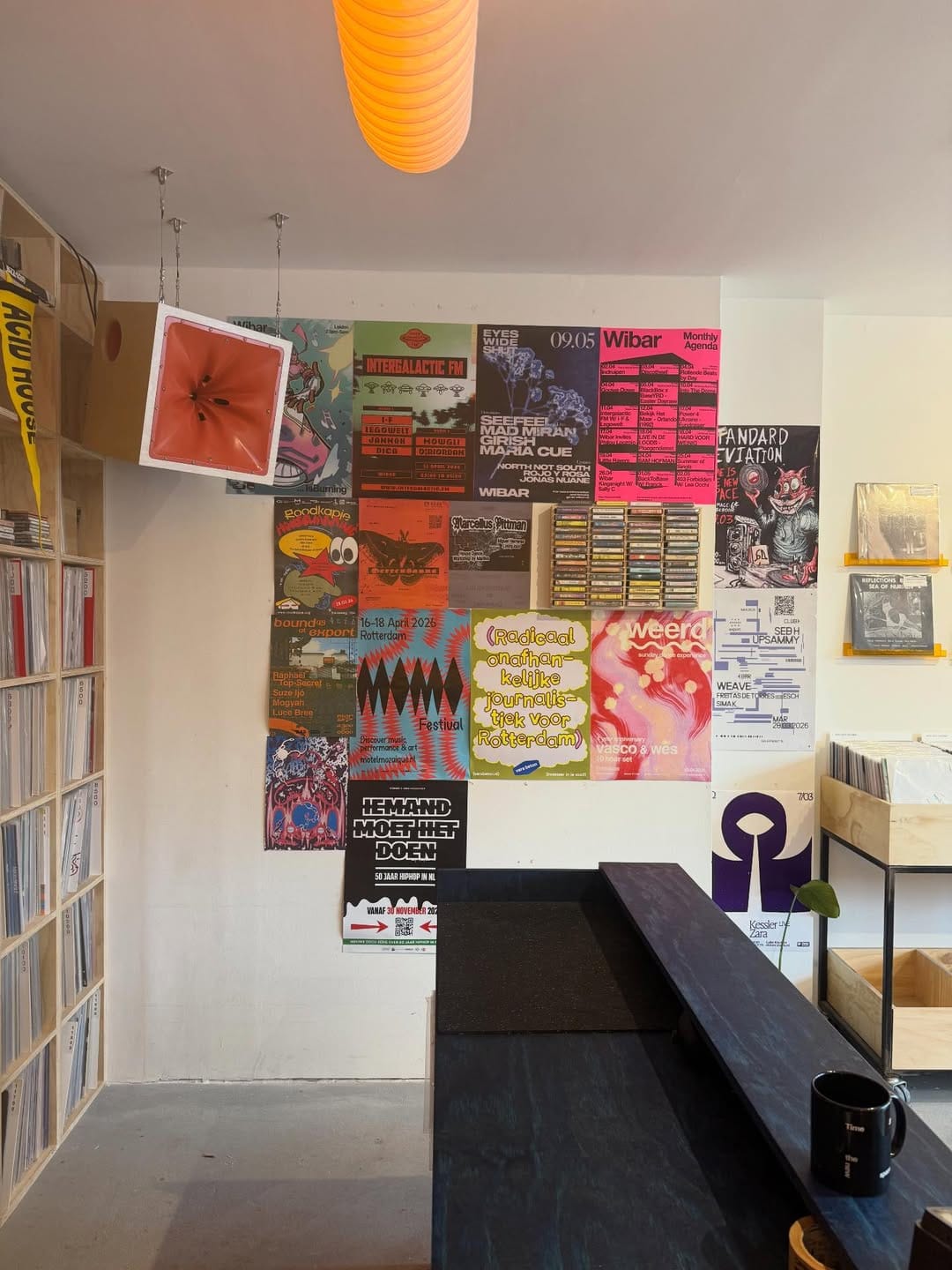
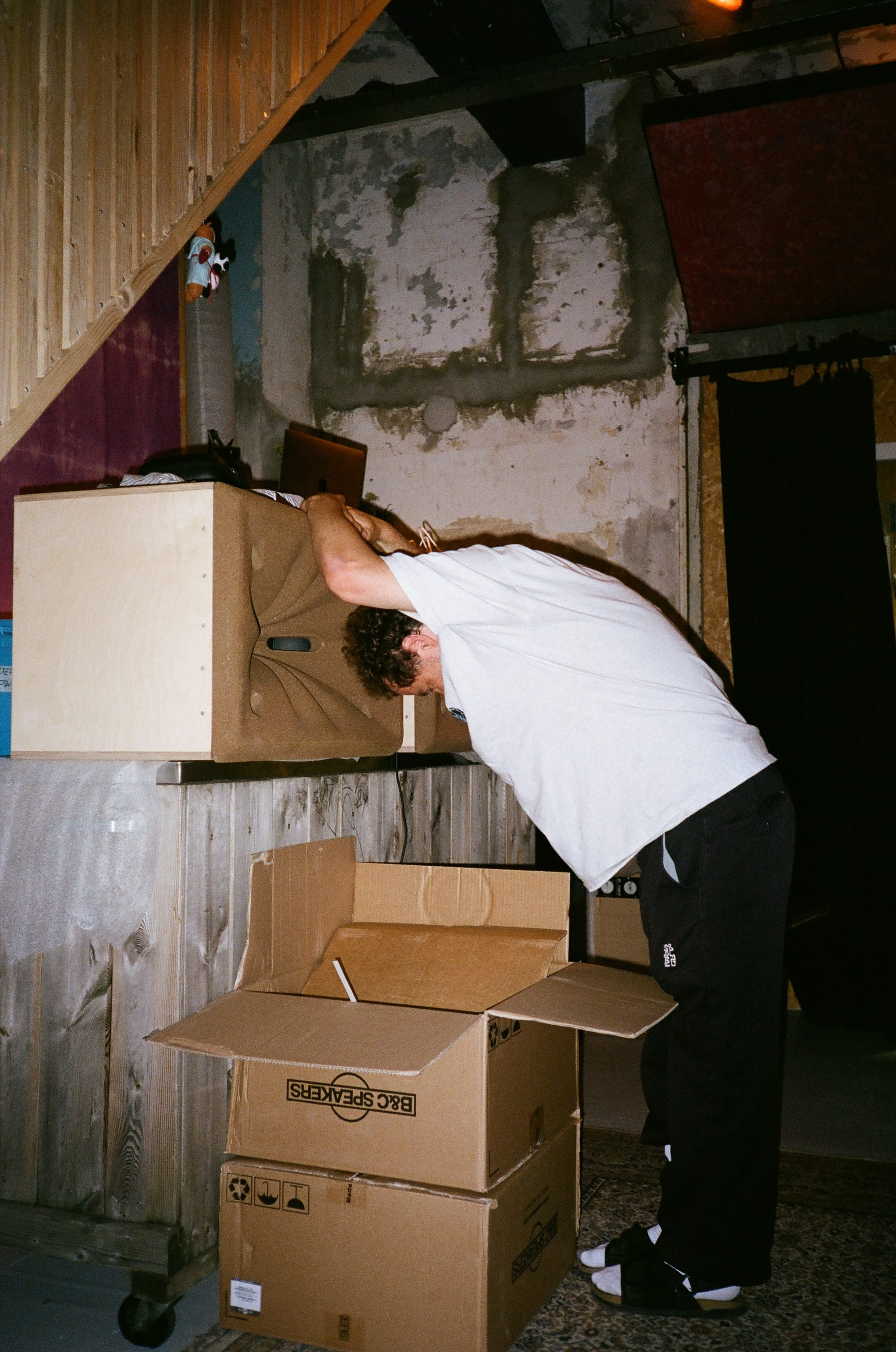
possibilities of sound is currently working on a variety of projects, each one rooted in a different kind of space. the first set of speakers found their home in the new Offbeat Records store in Rotterdam. Boaz tells us more:
the store has a name for the vibey and loud in-stores, but also attracts the more audiophile listener looking for that first pressing in good condition. so it had to perform in a party setting, but also please the more discerning jazz listener. we were looking for a more unique design visually, but also aimed at more control of our specific demands that a custom sound system could cater.
the sound fills the room well; everywhere in the store people will feel the music in the same way. during the day in a more ambience setting, while towards closing we put it louder and get more punch from the system.
the system draws people to the shop as words going around the sound system are great! often, people showcase their records on the sound system to others to get a full vibe on how the track will perform in a club setting. something which is hard to understand when dj-ing at home or listening on headphones.
left picture from Offbeat store, right picture by Tom Venrooy
since the 3rd of may, a new custom-built sound system has been running in the pos studio. in a space as intimate as pos, the difference is felt deeply. from one program to the next, across sounds and energies, the system holds the room in a way that has not only noticeably raised the musical experience, but has also increased the presence of… magick.
after that, the next project will take place in Shunter, a new cultural space opening in Rotterdam-Zuid at the end of may. the space is composed of two rooms with quite different characters. the smaller room will be open on a regular basis with the new sound system, designed for a range of experiences: intimate concerts, experimental sounds, easy listening with the garden door rolled open. the bigger room opens occasionally, suited for larger collective experiences or as a building site for art and performance. on the opening weekend, visitors will experience a custom installation combining four of the printed horns paired with 30” subwoofers.
Sanne runs Shunter together with Mark and Onno, and has also been involved in the sound project from early on, supporting its creative strategy and fundraising. she tells us what drew her to it:
when talking to Tom about the project, I immediately knew he has a deep passion for sound building, a fitting knowledge background, plus the right drive and team to make it happen. for me a project makes sense if there is a balance and quality to all the elements needed to make it a success, that's how I measure potential. even if not everything is there yet, I can sort of see where it could go, and for this project I definitely had that.
the road ahead has two directions. inward, the project aims to develop its knowledge exchange program through workshops, opening up the tools, techniques and thinking behind possibilities of sound to a wider community. the software tool used in the creation of the new horns is currently in development, with the goal of making it soon available to the DIY community.
outward, an exciting collaboration is taking shape with Takween, a festival in Jordan whose first edition is planned for 2027. the plans go beyond just providing sound, involving educational and musical programming alongside connections with local soundsystem builders to develop the festival's own sonic identity.
finally, possibilities of sound is also involved with Dubble, a listening cafe soon to open its doors in Amsterdam West, basically, our neighbours! a collaborative project with Kantarion Sound and Sonores Acoustics, the aim is to design two complementary sound experiences within the same space: a hi-fi system for more introspective listening, and a lo-fi system for the social, convivial side of a cafe. the acoustic behaviour of the space will be fully modelled, taking into account everything from kitchen machinery to street noise. quality coffee, a comfortable and soothing listening experience, with regular music programmation, opening end of June.
back to the essence
possibilities of sound is not only a project about new technology; it is the materialisation of a philosophy moved by the love of sound and connection. the people mentioned in this article, and the many more living between the lines, are proof of the power of sharing knowledge and the fight for collaboration over competition. in times of multiple, ongoing crises, it becomes important to pass on the history, values, and choices of those who moved against the current and amplified a message of unity and the right to celebrate.
as humans moving between studios, record shops, cultural spaces, and future encounters, the ambition remains simple: to make good sound accessible, meaningful, and felt equally by all bodies in a room. innovation here is not a spectacle; it is an instrument that reminds us of the very simple essence of closeness.
possibilities of sound believes that when acoustics, craftspeopleship, and care align, music stops being something we only hear and becomes something we inhabit together. the resonance continues beyond this publication. if you feel drawn to the project, curious about the software (currently in development) mentioned throughout the article, or interested in joining the conversation, you can reach out at sound@possibilitiesopenstudio.com
we’d like to thank everyone who has contributed to this project. it’d be nowhere near where it is now without these people:
Ascha, Ivan, Nemo, Zara, Valentijn, Luna, Johan, Bruno, Sanne, Ruben, John, Felix, Kinaida, David, Aga, Annette, Herman, Anna, Lou, Tom, Monse, Anne, Oscar, Alex, Loren, Andrea, Matteo, Han, Tharim, Amir, Mogol crew, Brandino, Joost, Dexter, Jan, Gijs, Xaos, Boaz, Chris, Piet, Jip, Teun, Alexi, Victor, Laura, Irene and all dancers.
if you’d like to experience this sound in the real world, here are the events where possibilities of sound will be present:
24 - 05: pos cocoon, possibilities open studio, Amsterdam
29, 30, 31 - 05: Opening Weekender, Shunter, Rotterdam (custom sound installation small room and pos x pattern soundsystem setup in the big room)
06, 07 - 06: pos 3 yrs, possibilities open studio, Amsterdam
project supported by stimuleringsfonds digitale cultuur & cultuurloket digitALL